
I recently found this comic and it really brought home the point of how times have changed in my lifetime. The addictive behavior of technology is a powerful force. The most recent impact is the closing of nearly 800 Toys R Us Stores in the USA. Yet this is only the beginning of how Play will change and in turn impact our kids. Below is a article by Esther Entin and published in The Atlantic that is important for all parents. It makes me realize that Overnight Summer Camp may be one of the last few areas that are tech free and dedicated to play.
What are your memories of playing as a child? Some of us will remember hide and seek, house, tag, and red rover red rover. Others may recall arguing about rules in kickball or stick ball or taking turns at jump rope, or creating imaginary worlds with our dolls, building forts, putting on plays, or dressing-up. From long summer days to a few precious after-school hours, kid-organized play may have filled much of your free time. But what about your children? Are their opportunities for play the same as yours were? Most likely not.
Play time is in short supply for children these days and the lifelong consequences for developing children can be more serious than many people realize.
THE DECLINE OF PLAY
An article in the most recent issue of the American Journal of Play details not only how much children's play time has declined, but how this lack of play affects emotional development, leading to the rise of anxiety, depression, and problems of attention and self control.
"Since about 1955 ... children's free play has been continually declining, at least partly because adults have exerted ever-increasing control over children's activities," says the author Peter Gray, Ph.D., Professor of Psychology (emeritus) at Boston College. Gray defines "free play" as play a child undertakes him- or her-self and which is self-directed and an end in itself, rather than part of some organized activity.
Gray describes this kind of unstructured, freely-chosen play as a testing ground for life. It provides critical life experiences without which young children cannot develop into confident and competent adults. Gray's article is meant to serve as a wake-up call regarding the effects of lost play, and he believes that lack of childhood free play time is a huge loss that must be addressed for the sake of our children and society.
WHO AND WHAT IS INTERFERING WITH CHILDREN'S PLAY?
Parents who hover over and intrude on their children's play are a big part of the problem, according to Gray. "It is hard to find groups of children outdoors at all, and, if you do find them, they are likely to be wearing uniforms and following the directions of coaches while their parents dutifully watch and cheer." He cites a study which assessed the way 6- to 8-year-olds spent their time in 1981 and again in 1997.
The researchers found that compared to 1981, children in 1997 spent less time in play and had less free time. They spent 18 percent more time at school, 145 percent more time doing school work, and 168 percent more time shopping with parents. The researchers found that, including computer play, children in 1997 spent only about eleven hours per week at play.
In another study, mothers were asked to compare their own memories of their playtime, to their children's current schedules. Eighty-five percent noted that their children played outdoors less frequently and for shorter periods of time than they had. The mothers noted that they restricted their own children's outdoor play because of safety concerns, a fact echoed in other surveys where parents mentioned child predators, road traffic, and bullies as reasons for restricting their children's outdoor play.
Adding to the problem, Gray notes, is our increasing emphasis on schooling and on adult-directed activities. Preschools and kindergartens have become more academically-oriented and many schools have even eliminated recess. It is not that anyone set out to do away with free play time. But its value has not been recognized. As a result, kids' free play time has not been protected.
FIVE WAYS PLAY BENEFITS KIDS
When children are in charge of their own play, it provides a foundation for their future mental health as older children and adults. Gray mentions five main benefits:
1. Play gives children a chance to find and develop a connection to their own self-identified and self-guided interests.
As they choose the activities that make up free play, kids learn to direct themselves and pursue and elaborate on their interests in a way that can sustain them throughout life. Gray notes that: "...in school, children work for grades and praise and in adult-directed sports, they work for praise and trophies.... In free play, children do what they want to do, and the learning and psychological growth that results are byproducts, not conscious goals of the activity."
2. It is through play that children first learn how to make decisions, solve problems, exert self control, and follow rules.
As children direct their own free play and solve the problems that come up, they must exert control over themselves and must, at times, accept restrictions on their own behavior and follow the rules if they want to be accepted and successful in the game.
As children negotiate both their physical and social environments through play, they can gain a sense of mastery over their world, Gray contends. It is this aspect of play that offers enormous psychological benefits, helping to protect children from anxiety and depression.
"Children who do not have the opportunity to control their own actions, to make and follow through on their own decisions, to solve their own problems, and to learn how to follow rules in the course of play grow up feeling that they are not in control of their own lives and fate. They grow up feeling that they are dependent on luck and on the goodwill and whims of others...."
Anxiety and depression often occur when an individual feels a lack of control over his or her own life. "Those who believe that they master their own fate are much less likely to become anxious or depressed than those who believe that they are victims of circumstances beyond their control." Gray believes that the loss of playtime lessons about one's ability to exert control over some life circumstances set the scene for anxiety and depression.
3. Children learn to handle their emotions, including anger and fear, during play.
In free play, children put themselves into both physically and socially challenging situations and learn to control the emotions that arise from these stressors. They role play, swing, slide, and climb trees ... and "such activities are fun to the degree that they are moderately frightening ... nobody but the child himself or herself knows the right dose."
Gray suggests that the reduced ability to regulate emotions may be a key factor in the development of some anxiety disorders. "Individuals suffering from anxiety disorders describe losing emotional control as one of their greatest fears. They are afraid of their own fear, and therefore small degrees of fear generated by mildly threatening situations lead to high degrees of fear generated by the person's fear of losing control." Adults who did not have the opportunity to experience and cope with moderately challenging emotional situations during play are more at risk for feeling anxious and overwhelmed by emotion-provoking situations in adult life.
4. Play helps children make friends and learn to get along with each other as equals.
Social play is a natural means of making friends and learning to treat one another fairly. Since play is voluntary and playmates may abandon the game at any time if they feel uncomfortable, children learn to be aware of their playmates' needs and attempt to meet them in order to maintain the play.
Gray believes that "learning to get along and cooperate with others as equals may be the most crucial evolutionary function of human social play ... and that social play is nature's means of teaching young humans that they are not special. Even those who are more skilled at the game's actions ... must consider the needs and wishes of the others as equal to their own, or else the others will exclude them." Gray cites increasing social isolation as a potential precursor to psychopathology and notes that the decline in play may be "both a consequence and a cause of the increased social isolation and loneliness in the culture."
5. Most importantly, play is a source of happiness.
When children are asked about the activities that bring them happiness, they say they are happier when playing with friends than in any other situation. Perhaps you felt this way when remembering your own childhood play experiences at the beginning of this article.
Gray sees the loss of play time as a double whammy: we have not only taken away the joys of free play, we have replaced them with emotionally stressful activities. "[A]s a society, we have come to the conclusion that to protect children from danger and to educate them, we must deprive them of the very activity that makes them happiest and place them for ever more hours in settings where they are more or less continually directed and evaluated by adults, setting almost designed to produce anxiety and depression."
THE LOSS OF PLAY AND RISE OF ANXIETY AND DEPRESSION
There has been a significant increase in anxiety and depression from 1950 to present day in teens and young adults and Gray cites several studies documenting this rise. One showed that five to eight times as many children and college students reported clinically significant depression or anxiety than 50 years ago and another documented a similar trend in the fourteen- to sixteen-year-old age group between 1948 and 1989.
Suicide rates quadrupled from 1950 to 2005 for children less than fifteen years and for teens and young adults ages 15-25, they doubled. Gray believes that the loss of unstructured, free play for play's sake is at the core of this alarming observation and that as a society, we should reassess the role of free play and the factors that seem to have all but eliminated it from our children's lives.
When parents realize the major role that free play can take in the development of emotionally healthy children and adults, they may wish to reassess the priorities ruling their children's lives. The competing needs for childcare, academic and athletic success, and children's safety are compelling. But perhaps parents can begin to identify small changes -- such as openings in the schedule, backing off from quite so many supervised activities, and possibly slightly less hovering on the playground that would start the pendulum returning to the direction of free, imaginative, kid-directed play.
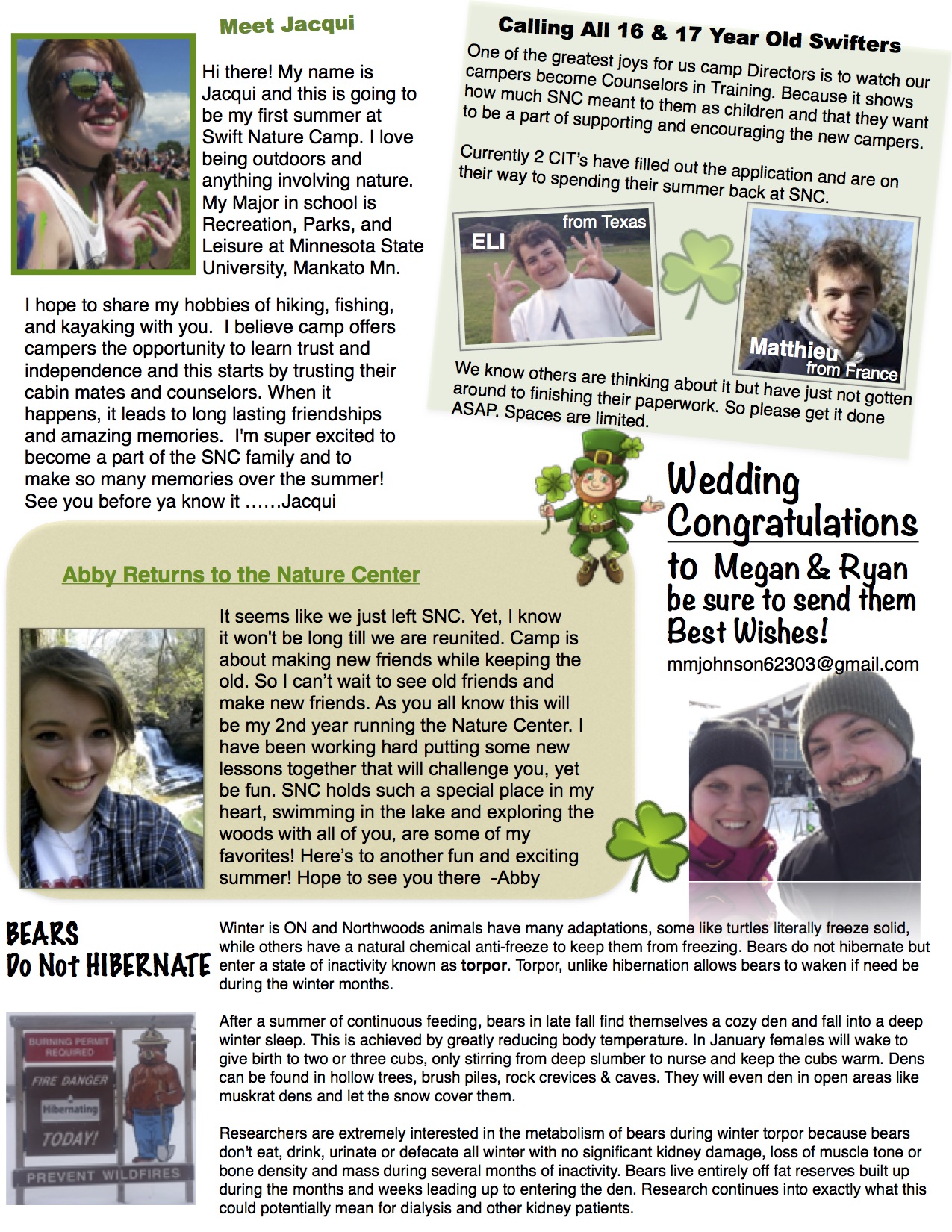
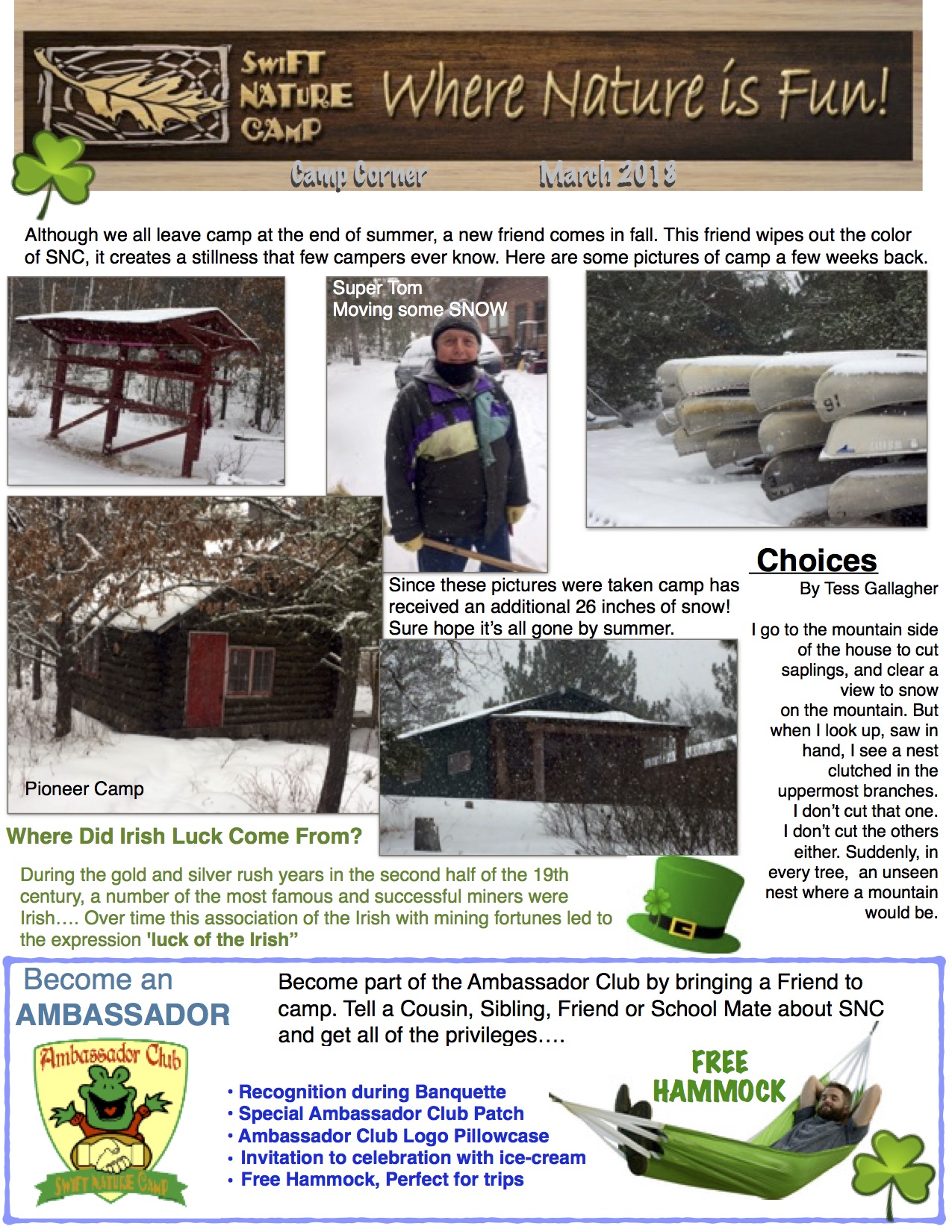
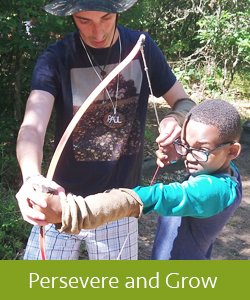 My “Happy Place” is often the response campers give when we ask them to describe their time at Swift Nature Camp. As the Director, part of my job is to stand back and observe. What I see from Campers & Staff is smiles, I hear laughter and notice a relaxed atmosphere all of which facilitate camp joy.
We all want happy kids. Meet Dr Martin Seligman who is a new breed of psychologists called Positive Psychologists. They ask not what is wrong with people, but what is right. They research what makes us do well in life and the reasons why some people thrive and find success and happiness in life.
We first have to agree that happiness is internal that can be shown externally or not. So instead of using a one-dimensional definition that’s dependent on momentary emotions and personality traits, Dr. Seligman has developed a more thorough theory of well-being that moves beyond the standard happiness traits.
PERMA is what Dr. Seligman uses to define his theory and the five measurable elements he has determined lead to well-being. Camp is filled with these PERMA Pillars and maybe thats why SNC is a “Happy Place”.
P: Positive Emotion-Is feeling happy, having positive thoughts about yourself, the people around you, or your surroundings. When someone reports they are feeling content, relaxed, or happy, then they are experiencing positive emotions. At camp, positive emotions are the norm, not the exception. We’re singing; we’re dancing; we’re doing skits that don’t make sense but that cause us to laugh so hard our stomachs hurt. Whether we’re telling jokes and stories around the campfire or just entertaining ourselves talking and hanging out together, positive emotion is literally swirling around camp. You can almost see a haze of happiness and fun surrounding everyone at camp.
E: Engagement-is being interested in and connected to what they are doing. When you’re engaged in your hobby, book or school, you’re fired up about learning something new and energized by the activity. Camp constantly exposes kids to new experiences and challenges – both recreational and social – that get them interested and excited to learn. They’re pushed to get outside their comfort zone to really engage and succeed.
R: Relationships-As Dr. Seligman says“other people are the best antidote to the downs of life and the single most reliable up.” Our life’s relationships – with our parents, our siblings, our friends, our spouses, and our co-workers – are key to our happiness. At camp we see old friends, make new friends, and just spend quality time building connecting with others. Camp is an oasis that is competition and stress free, built on positive relationship building, often giving campers tools they can take and use at home.
M: Meaning- Comes from “belonging to and serving something you believe is bigger than the self.” A team, religion, family. Cabin life helps kids gain an understanding of how valued they are. Swift shows campers what it means to be a valued and be an accepted member of a community. No camper is invisible, daily they connect with others, camp promotes integration. Kids learn that they are an important and valued member of their cabin group, and they discover their character strengths through recognition from peers and counselors. Campers learn the power they have by positively impacting others with friendship, gratitude & kindness.
A: Achievement-People flourish when pursuing goals not just mastering a skill. So, while having a great achievement is wonderful, much of flourishing comes from the striving towards the achievement. Ralph Waldo Emerson understood this by explaining, “Life is a journey, not a destination.” Daily at SNC, kids have the opportunity to try new things and master new skills. Simply practicing and working towards improving or challenge themselves to try something new adds to campers self confidence and their flourishing at camp.
We hope that whether your child has been at camp for 1 year or many, you see the positive impact Swift Nature Camp has had on your child. We all want happy kids. PERMA is just one way we can better prepare children for adult life and how we deal with difficult situations when they occur. PERMA is just another skill that SNC provides to its campers and one we hope you can use in your home.
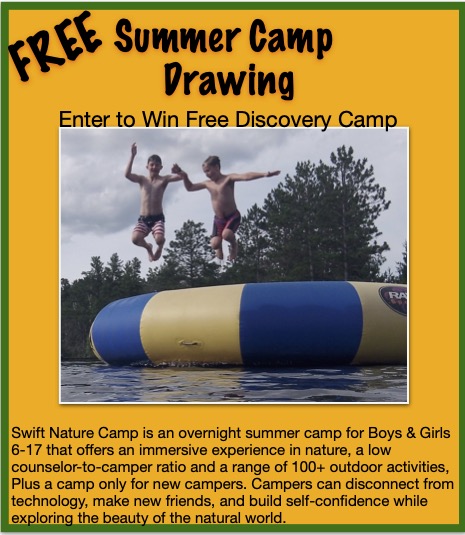
Looking for an affordable Wisconsin overnight summer camp in 2026? Look no further than Swift Nature Camp, located just 3 hours from Madison, Wi. And now, we're offering an incredible opportunity: one lucky winner will receive a FREE summer camp session for 2026! That's right, you could enjoy two weeks of summer camp completely free of charge, thanks to Swift Nature Camp.
Entering is easy. Simply click on the "Free Summer Camp" link, watch our 2 minute video, and fill out the entry form with your name and email. It's that simple! And with a value of $1000, this is an opportunity you won't want to miss. Thats Right one "FREE WISCONSIN OVERNIGHT SUMMER CAMP" winner will be awarded in just 10 days.
At Swift Nature Camp, we believe that every child deserves the chance to experience the magic of summer camp. That's why we offer a wide variety of fun and educational activities, from swimming and hiking to science and art. Our experienced counselors and staff work hard to ensure that every camper feels welcome, safe, and supported, no matter their background or experience level and yes we are screen free.
So why wait? Enter now! Click to win a FREE DISCOVERY CAMP session at Swift Nature Camp. We can't wait to see you this summer!
Read more about Discovery Camp a special Camp only for 1st timers
Overnight Summer Camp Is Expensive.Looking for an affordable summer camp in Minnesota? How about FREE Summer Camp? At Swift Nature Camp we are giving you a no cost option for summer camp.! Located just 2.5 hours from Minneapolis and offers a fun and supportive environment for kids to learn important life skills. And now, we're excited to announce that we're giving away one (1) FREE Discovery Camp for 2023! That's right - you could win two weeks of FREE summer camp simply by watching our video and filling out the entry form. This is a $1500 value and an opportunity you won't want to miss. Don't let the cost of summer camp hold you back from giving your child an unforgettable summer experience. Enter now for your chance to win and give your child the gift of summer camp at Swift Nature Camp. Only one winner per summer Good luck!
Read more about Discovery Camp a special Camp only for 1st time Campers
Every Summer a pilgrame begins that of Teenagers going to overnight summer camps in Wisconsin. For many this experience may have begun as a child and just continues but for others it is a new experience. Either way a an Overnight Teen Summer Camp in Wisconsin can have profound positive effects on your teen now and later in life. Below are just a few of the ways our teenagers personally grow and develop at Summer Camp.
Leadership Activities
As our children mature in to the teen age years they are increasing looking to gain additional responsibility. At Swift Nature Camp teen are the older brothers and sisters at camp. They role model for the younger children and even help them in learning new skills. Having the younger campers look up to you gives teen a positive feeling along with a feeling of belonging and responsibility to others. That's what leadership is.
Learn Skills
An overnight teenage summer camp provides a full of physical activity. Teenagers are stronger and are more wiling to take risk allowing counselors to focus on developing skills. At Swift Nature Camp no better place is this shown is the overnight adventure trips that teens participate in. These trips are longer and more difficult to stretch a teens skill level give each teen a feeling of accomplishment. Teen who find a hobby or a life passion are often healthier and have lower rates of obesity.
Increasing Responsibility
Camp is all about personal responsibility and this is even more true for teens. Often parents far to often remind teens to do all the normal hygiene activities. As teen’s in crease responsibility to make good choices for their health which in turn the reinforces benefits and consequences. Often, when another reminds teens it takes better than a parents. Having teens accountable for their actions with regard to behavior and interactions with fellow campers. Even the most dependent teen can learn to rely on himself when he spends time away from mom and dad. What is amazing is often these habits can continue once back home. . 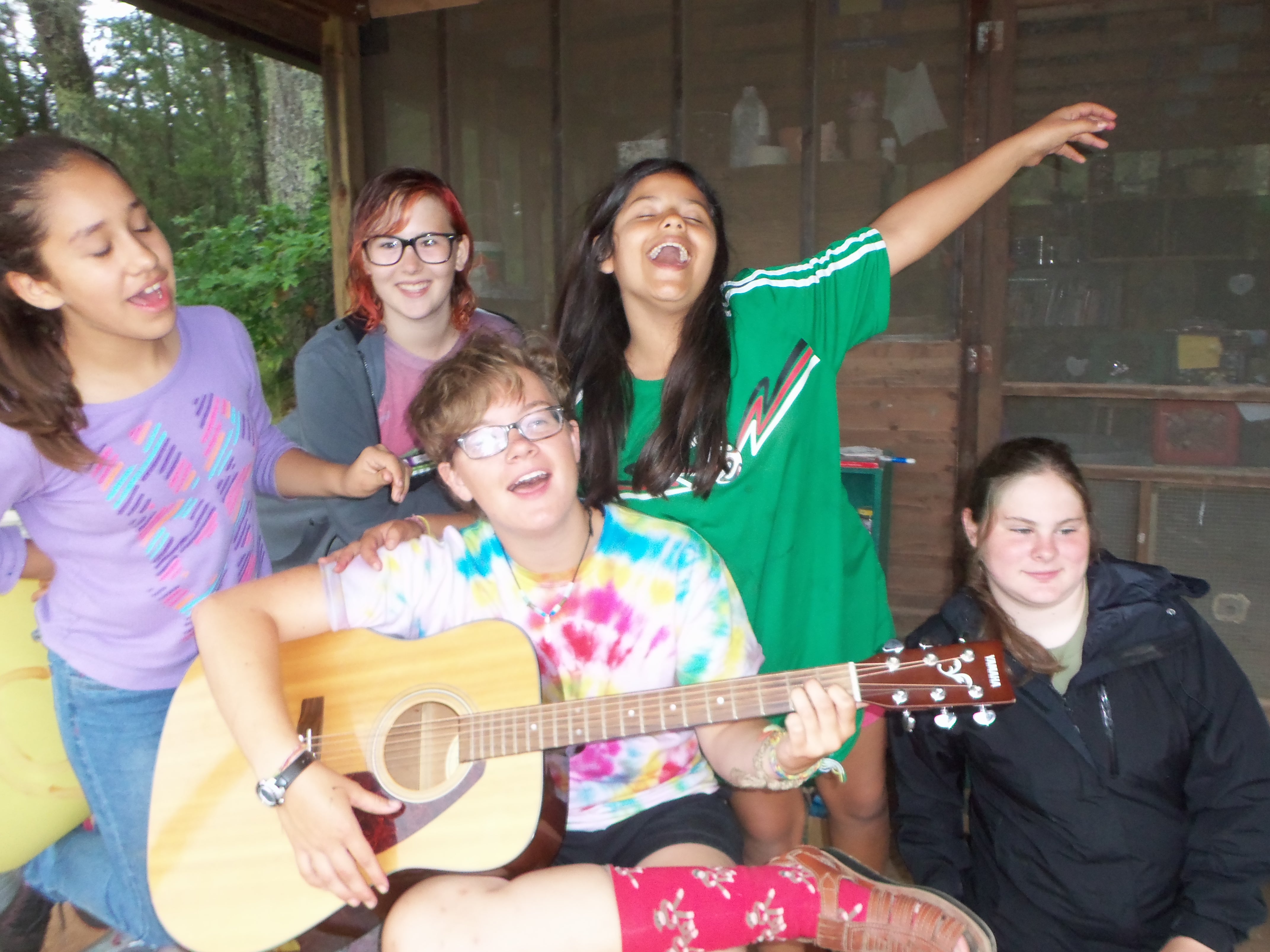 Improving Teamwork
Teamwork is what camp is all about. This is even more true at Swift Nature Camp as we see teenagers grow to build a tight community within their cabin. It is this strong, value centered community that changes teens. While away at a sleepaway summer camp teens will increase their ability to work with others even if their cabin mates are from a variety of backgrounds and countries. Campers at a teen summer camp must learn to work collaborate with peers and be an effective member of a positively motivated team.
Gaining Friendship
Teens often are trying to find their place in this world. Camp provides a place that is supportive of who they are on the inside. We have often heard campers say, "They make the best friends at camp". Why when you live with someone, you see the good the bad and the ugly. You realize that person has good days and bad, yet you are their for them. Not even school can build friendships like camp.
No Screens
Today we all are on our screens. Camp provides an escape from screens helping teenagers rediscover the face to face real world with real people. Camp provides so many activities and personal relationships most teens do not miss their electronics while at camp. We all can use a little less screen time.
Appreciation
Teens can often be self centered and to consumed on their appearance and how they are perceived by others. While at camp where they brave the elements camp provides the opportunity to appreciate some of the simpler things in life. These include a dry warm bed,hot food at dinner cooked over a flame and friends that are there for them. Not to mention nothing is better than when a cabin of teens heads down to the waterfront to watch the sun set into the lake.
When teenagers head off to an overnight summer camp you know they will have the time of their life while increasing their social, mental, and physical health.
It's summer camp time and your child is excited about the adventure that awaits, however you can help them have a more successful time by having the below conversations.
Talking About Camp
It's best to start talking about camp early on. This can be stories of your own experiences or of friends and relative. Maybe even a story book about camp. Be sure they are positive experiences, this is not time for Friday the 13th. Then I like to ask "If you were going to camp what activities would you like to do". This question can give you incite to what they are thinking. Remember, your child may not be ready for overnight camp and that OK. It is important to realize that most campers go to overnight camp between 8-10 years of age. Often this seems young for parents but kids are generally ready if encouraged. It can get harder the older a child gets. A handful of overnight camps like Swift Nature Camp offer a Discovery Camp only for 1st time campers, where additional support is on hand to make the first time camp experience a success. If your child is really reluctant you might try suggesting a friend or relative would enjoy the adventure as well and go to camp together. This go with a friend can often help a child agree with the whole camp idea.
Find a Camp
This can be fun to hit the internet and look at all the options available. For younger campers it is best to pick 3 or 5 that you feel would be best suited for you and your camper. One of th ebest ways is to talk to the camp director and ask for references. Then spend some time with your camper and go through the choices, looking at each of the activities and camp philosophies that are best for him or her. Remember, websites are meant to sell camp to kids. So it is your responsibility to look at all the parent things like safety, health and hiring, etc.
 Sell Camp
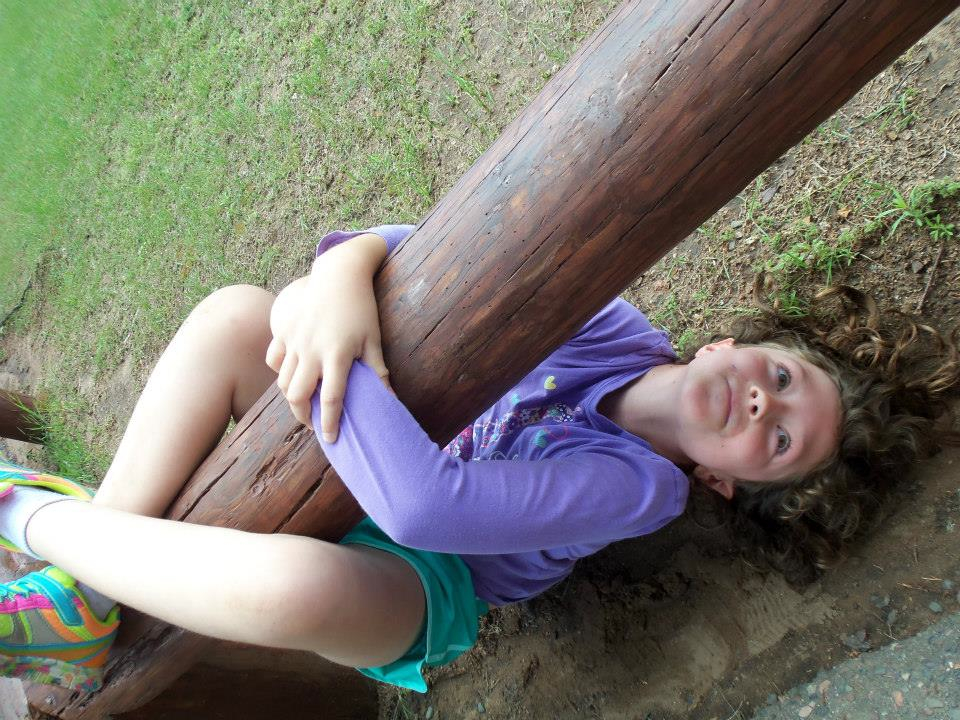
Once your camp is selected be sure to talk about it often. Keep selling camp as a positive fun experience. All the friends and excitement. Some things to say include "Sure wish I could go". "Your so lucky". Help to build confidence by focusing on the qualities they have that will make the camp experience easy for them. Of course you don't want to overload future campers with too much information so as a parent pace yourself and bring it up 1 or 2 times a week at most.
We All Love Routines
"Summer amp is filled with routines, Days are scheduled much more than it looks from the outside world" says Jeff Lorenz, Director of Swift Nature Camp. It's best to become familiar with the camp routines and then build some of them in to your child's day. That way you will reduce camp trauma and make it easier to fit into camp life. This can include: making beds, packing and cleaning up. Personal responsibility is important at camp as well, including: brushing your teeth and getting dressed. At home use meal time as a time to practice trying new foods and helping to cleaning up.
Lights Out
Often one of the hardest parts of camp is after a day of fun is over and we are tucked in our bed and the lights go out. This is when we start to think of home and all that we are missing. To help your child beforehand it is good that they have some experience with sleepovers at friends or relative. Try not to talk with them while they are gone. This is a time to build independence. Falling asleep strategies are important as well, like deep breathing or visualizing himself at a favorite place. Since camp at night can be dark and quiet be sure to help your child be prepared for such a experience. Often a camp flashlight can make campers feel more secure.
Living Communally
One of the biggest part of overnight summer camp is living with a group of people for a few weeks. It is this experience that is at the heart of camp. Most campers say they make better friends at camp than at school. Why because we live together sharing life. Relationships are the heart of every camp experience, Since camp is like a family it is good to revisit some of the ways we deal with people. They have the power to make everyone's experience at camp better by being a supportive member of the team. Prepare your child for a diverse cabin getting along with a wide variety of people is so important. Help them to make new friends by asking about others' interests and being a good listener. Friendships at camp often last a lifetime.
Nature
Summer camp involves fun & relationships all in the great outdoors. Help them to appreciate nature and the outside. All the cool things that are outside waiting to be discovered. Help them to also be aware how to be safe outside. This includes, Drinking water, using sunscreen, and bug spray. Also ask what else they may be afraid of, this will help you ease those fears.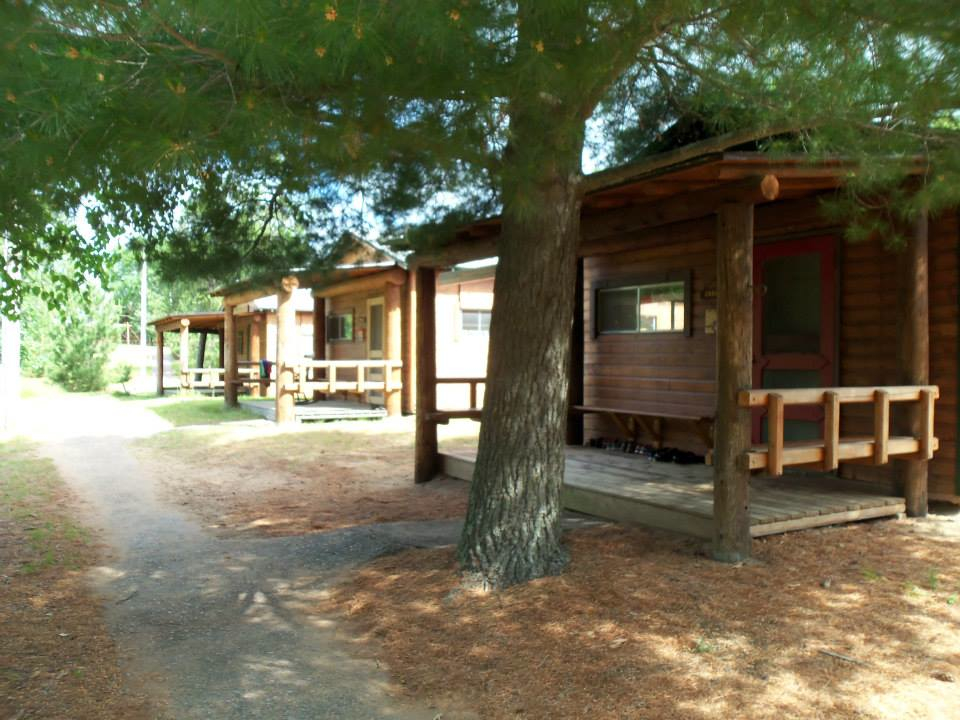
Homesickness is not an illness
Homesickness is not an illness it just means you are loved back home. So don't make your child feel as if this is a sickness it is a normal feeling. Let your child know they may experience it by feeling lonely or even have a stomachache. Let them know staff are on hand to help so be sure to let them know, they will help and try to get them feeling better as quickly as possible. Jeff Lorenz says "Please parents do not tell your child that you will save them if they are homesick, this only sets them up for failure. Instead highlight qualities they have that will help them stay the full session,"
Off to Camp
Be sure to pre write letters to your child. That way the first day they will have mail. Your mail should not tell them how lonely it is with out them or how bad you miss them. But instead say a few dull things about home then ask questions about food, friends activities and more. Hopefully you per-addressed some envelopes to ensure a response.
Sharing
Talk and listen is so important in this time leading up to camp. What your child have to say about camp? What are the hopes and fears? What do they say to friends? If the questions or concerns linger have your camper call or email the directors to get an answer. Help your child realize they are not alone and millions of children every summer head off to overnight summer camp. Most have the time of their life and can not wait to return, we at Swift Nature Camp wish the best for you and your family. Parents we know this is not an easy decision, we have sent our child off to another summer camp and cried the day he left and felt the wonderful experience filled with new friends , fun and opportunities of self-reliance on the day we picked him up. One last thing Summer camp is a reflection of life, it is not Disneyland. Remind yourself and child of this their will be good days and not so good days, but our goal is to have more good than bad.
If you would like more information about Finding the Best Overnight Summer Camp for your child please feel free to call us or email.
Happy Trails Lonnie & Jeff
 All the latest News from SNC
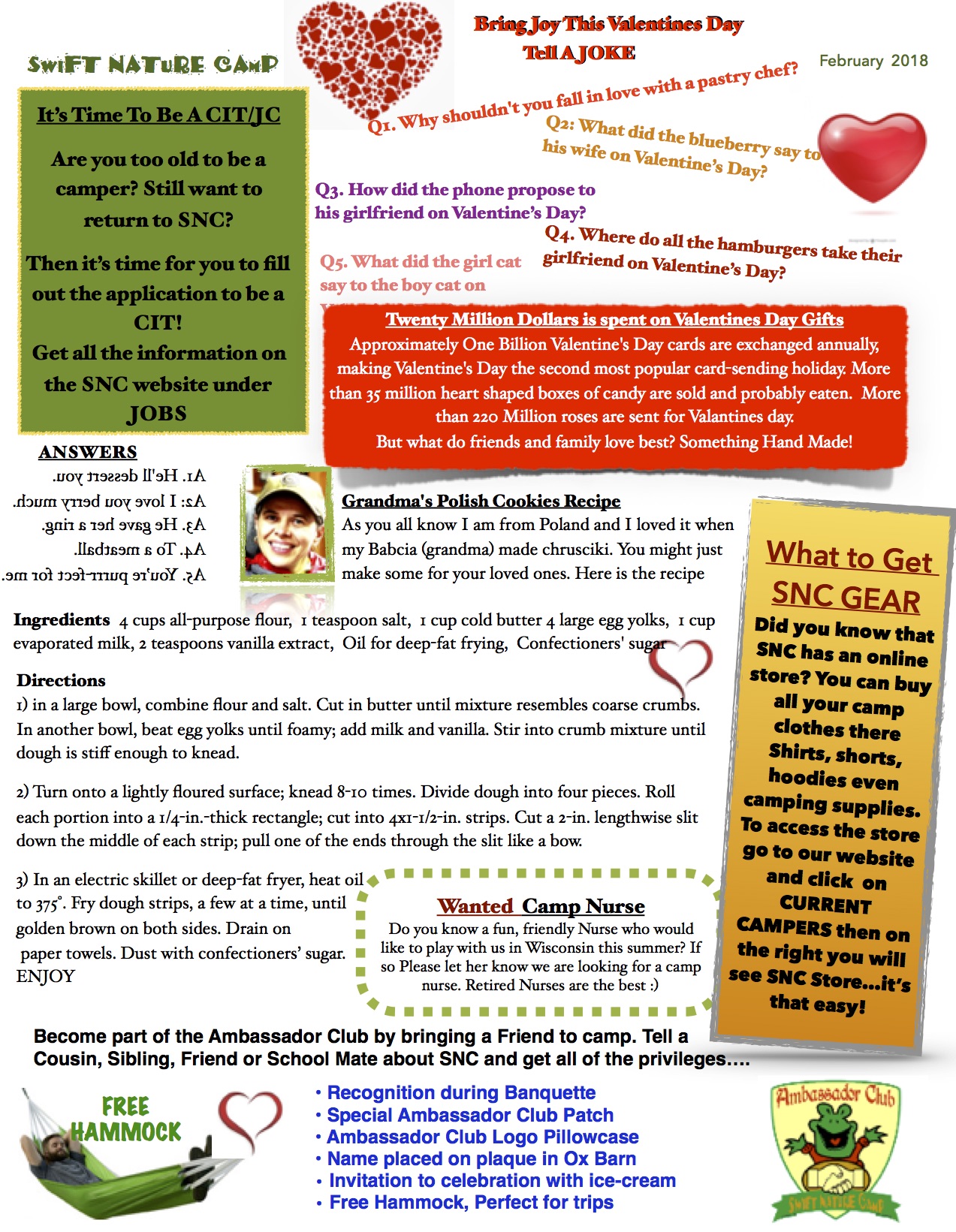
What's Next If You Are A Retired Nurse?
1-Summer Camp Nursing
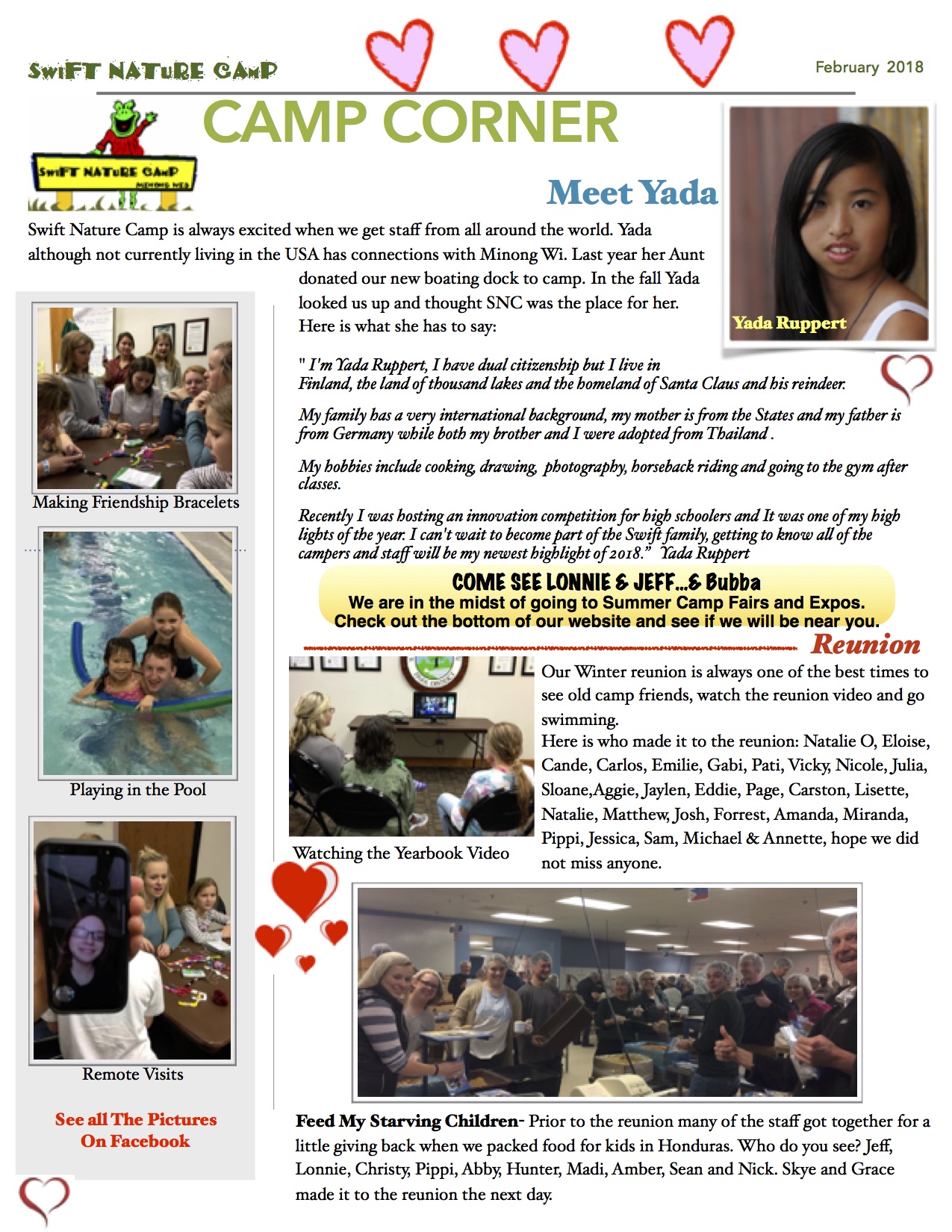
Thousands of summer camps every summer are looking for a camp nurse. This is the perfect place for a retired cmap nurse. These positions are only during the summer and often are out in the country away from city life. Camp Director Jeff Lorenz says " Our camp nurse is a valuable part of the camp team. Although she only spends a few hours a day in the Health Center it is the other time when she is being a friend to campers or helping in the nature center or even at arts & crafts that makes he so valuable. She is part of the community of camp" So if you are looking for a place to be loved and appreciated while having fun, being a summer cmap nurse might just be the place to look. Many states are part of a compact that makes it easy to be a nurse in another state for a month or two. Swift Nature Camp is currently looking for a camp nurse for the summer of 2018.
2-Home Care Nursing
One of the benefits of Visiting patients in their homes is the flexible hours, letting you work as much or as little as you choose. Often home care includes: wound care, palliative care and other home support services that allow the patient to care for himself as much as possible.Home health care is growing five times faster than the average for all health care industries. With an aging population,it seems clear that this will be an area of health care that will be around for a long time to come.
3-Substitute On-Call School Nursing
Being a substitute school nurse is right for you if you have lots of experience and a love of children. Working as a substitute school nurse provides extra income and ensures that you will have weekends, evenings and school holidays off. If you are approaching retirement, you can give this career a try before you retire by submitting the required information, along with your schedule, so school boards can call you when needed. Qualifications vary by state and school district, and a criminal background check will probably be required before you are allowed to work with children. Substitute school nurses tended to make between $12 and $20 an hour as of January 2011.
4-Flu Shot Clinic
So you need a little cash around the holidays, try working at a flu shot clinic it might may be the answer. Locations are everywhere so you are never far from work weather it be clinics in malls, town halls and other locations. Often, hese clinics are often run by private immunization companies that hire Recent graduates and retired nurses looking for cash, flexible hours and convenient locations.
Yes, Retired Nurses you could spend the rest of your days teying to catch that ne big fish that has eluded you all these years. Or you could get back into a working lifestyle but under your terms.
 It’s Summer Camp Season and for many parents this is a time of high anxiety. Planning a summer where their children will not be bored, have new adventure and get to make new friends is no easy task. Parents look no further, overnight summer camps provide children a safe, nurturing and educational environment that supplements a child’s personal development while providing fun and making new friends. This might seem like a tall order to fill but with the right advice, parents can successfully find the perfect summer camp for their children. The key to remember for any parent there is no BEST summer camp there is only the RIGHT summer camp for your child. SummerCampAdvice.com was developed to give parents informative articles and videos giving helpful hacks from; what questions to ask a camp Director to Who Accredits Summer Camps. This handy reference will ensure that parents are doing their best for their children.
Developed by actual Camp Directors, Summer Camp Advice is aimed for the parents who are just starting out the process of searching for the right summer camp for their children. A good starting point is to look for a camp that adheres to the same values and principles that your family holds, thus the camp will serve as a reinforcement of your family’s positive values and principles, while also teaching new skills and lessons. Another important characteristic of a good summer camp is being sure that the camp has fully trained staff.
The SummerCampAdvice.com spokesperson said, “Today, summer camps have progressed from campfires to computer screens and from nature trails to rollerblade rinks which make it even more difficult to choose the right camp for your child. Even with all those changes, the need for summer camp remains unchanged; children still need to use their summer break in a healthy, productive way and it is even better if it is without a screen. A good summer camp not only teaches skills but is equally concerned with teaching a child life skills.”
It is important that parent first start with their child’s needs, wants and desires. So for instance if your child loves animals, you might consider a camp that has an emphasis with critters. Often, this will raise their excitement level for going to camp. Next, find a handful of camps that meet some of your qualifications, time, cost, location, etc. Learn what’s next at summercampadvice.com
Today, many parents are reluctant to send their child to an overnight camp. The media has hyped up all the fears but rarely reports on the good that a child will gain from leaving home for a few weeks. Summer Camps through proper guidance encourage self- control, build self-sufficiency, and develop tolerance for others. “However, the biggest change you will see in your child when they return home is self-esteem, being away and doing things on their own builds a child’s confidence that they do not need Mom & Dad for everything. Is that not our job as parents to help our children feel comfortable to leave the nest someday?” says Jeff Lorenz Director of Swift Nature Camp.
Today some 10 million Americans go to summer camp while another 1 million or so international children come to American summer camps. So give your child a gift, a gift that will last a lifetime, just be sure to do your research and find the best summer camp for your child with the help of Summer Camp Advice for the time you put upfront will more than reap the benefits.

Testimonials
-
3 weeks was not enough, next year I want to stay for 6 weeks.
3 weeks was not enough, next year I want to stay for 6 weeks. -
I really liked the Animals in the Nature Center.
I really liked the Animals in the Nature Center. -
I like the new friends I made, we still chat on Facebook.
I like the new friends I made, we still chat on Facebook. -
In the cabin our counselors made it feel like a respectful loving family.
In the cabin our counselors made it feel like a respectful loving family. -
I cried for days after leaving my SNC family of friends.
I cried for days after leaving my SNC family of friends. -
I liked swimming every day in the lake.
I liked swimming every day in the lake. -
When I returned home I loved telling my parents about my SNC adventures.
When I returned home I loved telling my parents about my SNC adventures. -
The New Lego building is a wonderful place to be creative and make friends.
The New Lego building is a wonderful place to be creative and make friends. -
I like being out in Nature and away from the city sounds and lights.
I like being out in Nature and away from the city sounds and lights. -
The Canoe trips are the best, I always feel like an explorer.
The Canoe trips are the best, I always feel like an explorer. -
Being independant and making my own decisions was great.
Being indépendant and making my own decisions was great. -
I liked that it was non-competitive and everyone was kind.
I liked that it was non-competitive and everyone was kind. -
I was surprised how most of the kids were like me, kind, fun and liked being outside.
I was surprised how most of the kids were like me, kind, fun and liked being outside. -
I thought I would miss my electronics, but it was no problem.
I thought I would miss my electronics, but it was no problem. -
I was excited to get my Archery Achievement Award, it took dedication.
I was excited to get my Archery Achievement Award, it took dedication. -
I want to go back to SNC.
I want to go back to SNC. -
I like learning about Nature and hearing the Loons at night.
I like learning about Nature and hearing the Loons at night. -
I gained so much independence being at camp for 2 weeks.
I gained so much independence being at camp for 2 weeks. -
This is my 5th summer, I love it.
This is my 5th summer, I love it. -
I liked that all the activities were in a non-competitive atmosphere.
I liked that all the activities were in a non-competitive atmosphere. -
Their is something Magical about SNC, Friends, Activities, Nature, It's all Great.
Their is something Magical about SNC, Friends, Activities, Nature, It's all Great. -
I like making beaded animals and friendship bracelets in Arts & Crafts.
I like making beaded animals and friendship bracelets in Arts & Crafts. -
Riding horses on a trail in the woods was Awesome.
Riding horses on a trail in the woods was Awesome. -
The 1st timer camp was good cause we were all the same.
The 1st timer camp was good cause we were all the same. -
When we went hiking it was hard but the sites from the hill were breathtaking.
When we went hiking it was hard but the sites from the hill were breathtaking. -
My friend had been here and he was right... it's a blast.
My friend had been here and he was right... it's a blast. -
I'm kinda sad, this is my last summer, wish I had started younger.
I'm kinda sad, this is my last summer, wish I had started younger. -
Meeting new people from around the world is amazing.
Meeting new people from around the world is amazing. -
I liked that my counselors were friendly and encouraged me to try new things.
I liked that my counselors were friendly and encouraged me to try new things. -
SNC is about NO cliques.
SNC is about NO cliques. -
I liked daily picking the activities I wanted to do.
I liked daily picking the activities I wanted to do. -
It's the Funnest camp in the world, I got along with everyone.
It's the Funnest camp in the world, I got along with everyone. -
SNC is my home away from home.
SNC is my home away from home. -
I really enjoy meeting new kids from all over and counselors every year.
I really enjoy meeting new kids from all over and counselors every year. -
So many activities to choose from, we are never bored.
So many activities to choose from, we are never bored. -
Every year is a new adventure in camping, community and nature.
Every year is a new adventure in camping, community and nature. -
I enjoyed seeing what America was like.
I enjoyed seeing what America was like. -
Kindness and understanding is what camp is all about.
Kindness and understanding is what camp is all about. -
I loved it all... Don't' change a thing.
I loved it all... Don't' change a thing. -
I like that we got to shoot sling shots.
I like that we got to shoot sling shots. -
Camp is so much better than staying home all summer.
Camp is so much better than staying home all summer. -
It took a few years but my swimming really improved.
It took a few years but my swimming really improved. -
I feel completely included and accepted.
I feel completely included and accepted. -
It is amazing having your Birthday at camp.
It is amazing having your Birthday at camp. -
The small size makes SNC excellent.
The small size makes SNC excellent. -
I liked learning about nature and ecology.
I liked learning about nature and ecology. -
SNC is a down to earth experience without junk food or electronics.
SNC is a down to earth experience without junk food or electronics. -
I liked the shorter first timer camp & my councilors were fun and caring.
I liked the shorter first timer camp & my councilors were fun and caring. -
Living on a lake with all the water activities is wonderful.
Living on a lake with all the water activities is wonderful. -
SNC is down to earth and not a rich kids camp.
SNC is down to earth and not a rich kids camp. -
I liked SNC because it was not a sports camp.
I liked SNC because it was not a sports camp. -
Free time is the best.
Free time is the best. -
I like being away from home and out in the woods.
I like being away from home and out in the woods. -
Camp friends are the best friends.
Camp friends are the best friends. -
SNC is about trying new things, meeting new people and being on my own.
SNC is about trying new things, meeting new people and being on my own. -
Counselors were great.
Counselors were great. -
I really like the Arts & Crafts Castle.
I really like the Arts & Crafts Castle. -
This was my best summer ever.
This was my best summer ever. -
I gained confidence trying new activities and meeting new folks.
I gained confidence trying new activities and meeting new folks. -
This is my 5th summer, I love it.
This is my 5th summer, I love it. -
I feel accepted and loved at SNC.
I feel accepted and loved at SNC. -
Tubing was the most Fun.
Tubing was the most Fun. -
I feel like I belong to something bigger than me, a community.
I feel like I belong to something bigger than me, a community. -
Friends is what brings me back to SNC.
Friends is what brings me back to SNC. -
I really look forward to Pizza Night.
I really look forward to Pizza Night. -
Swift is a good fit for me, I love nature and being outside.
Swift is a good fit for me, I love nature and being outside. -
I got to shoot a real gun.
I got to shoot a real gun. -
My counselors were very encouraging when i was unsure of new activities.
My counselors were very encouraging when i was unsure of new activities. -
Making new friends is easy at Swift.
Making new friends is easy at Swift. -
Counselors made sure I felt included in the cabin.
Counselors made sure I felt included in the cabin. -
I liked coming to SNC with my sister.
I liked coming to SNC with my sister. -
Sleep in Sundays are one of my favorite days at camp.
Sleep in Sundays are one of my favorite days at camp. -
I got to bring my pet from home to SNC.
I got to bring my pet from home to SNC.


- Arts Camp (3)
- Best summer camps (35)
- Camp Counselors (16)
- Campers R Talkin' (6)
- Canoe Camp (7)
- Children's Summer Camp (97)
- Coed Summer Camp (2)
- Eco Friendly Summer Camp (8)
- Environmental Camp (37)
- Girls Summer Camp (5)
- Green summer camps (2)
- Hiking Camp (4)
- Horse Camp (1)
- Kid's Camp (36)
- Minnesota Camp (19)
- Movies (2)
- Nature Camp (57)
- Old Fashioned Summer Camps (12)
- Outdoor Youth Camp (33)
- Playing Outside (13)
- Riflery Camp (3)
- Science Camp (41)
- Science Summer Camp (20)
- Shooting Camp (1)
- SNC REVIEWS (1)
- Sports Camp (4)
- Summer Camp (72)
- Summer Camp Advice (47)
- Summer Camp Discounts (5)
- Summer Camp Savings (9)
- Summer jobs (21)
- Summer Youth Camp (25)
- Swimming Camp (3)
- Teen Camp (12)
- Traditional Summer Camps (11)
- Travel Camp (3)
- Wisconsin Camp (20)
- Parents (88)
- More Camp Information (1)
- Camp News (44)